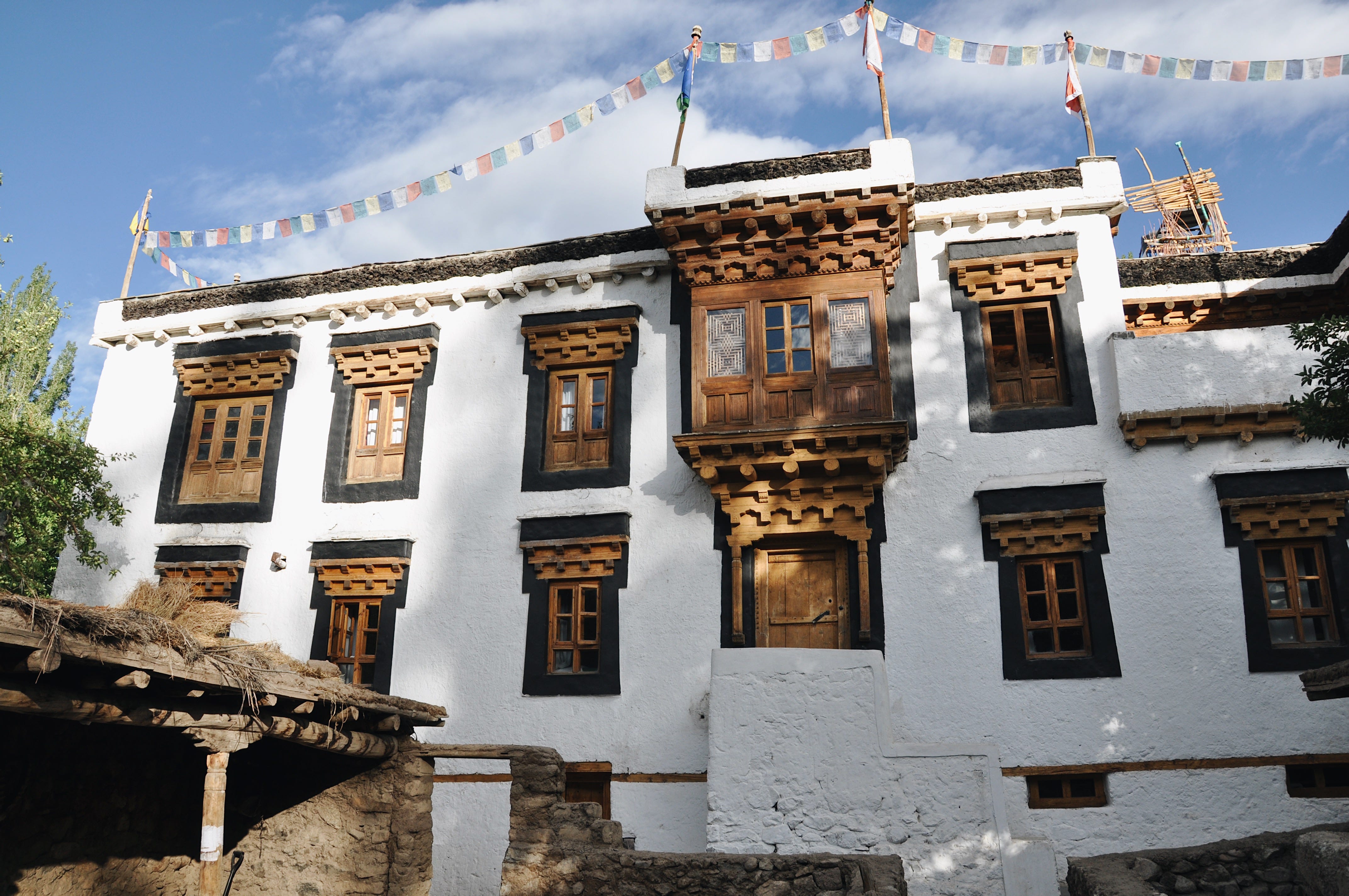
Ladakh, a Himalayan Haven
Guest author Janaki Brolin takes us to the remote, mountainous region of Ladakh, a former Buddhist kingdom in far north India that sits at the crossroads of ancient trade routes across the Himalayas

Words: Janaki Brolin
Images: Per Brolin
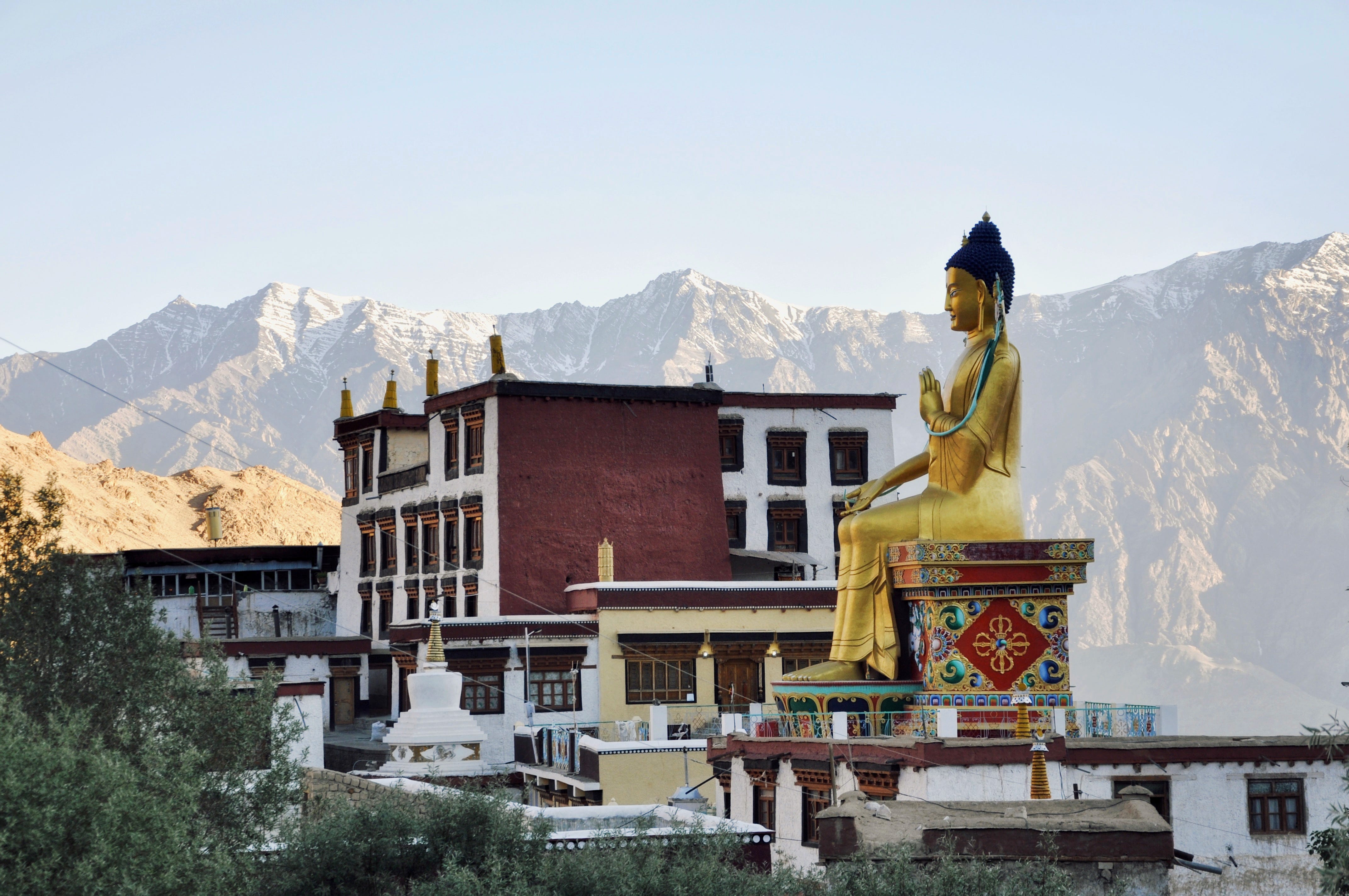
North of the Great Himalayas, cradled between Pakistan and China, lies the former Buddhist kingdom of Ladakh. A land of high passes, known in the local language as Marygul—“the red land”—Ladakh boasts a geological history as evocative as its human heritage. An ancient ocean lay here once. Tethys was swallowed by the collision of tectonic plates, leaving behind just a slither of water. At the helm of India, Ladakh was born: an ocean bed burnt red. The River Indus now marks the path of a geological fissure and lends its name to the country that it crowns.
I study the map. Bewildered by the vast empty white spaces, I find it difficult to orientate myself. It is the river that guides me, as it once did the scholars who established institutions of learning and worship along the slopes of its valley. I head west, following the course of the Indus downstream. Red-brown rock, as far as the eye can see, is encircled by snow-capped mountains creating a jagged horizon against a picture-blue sky.
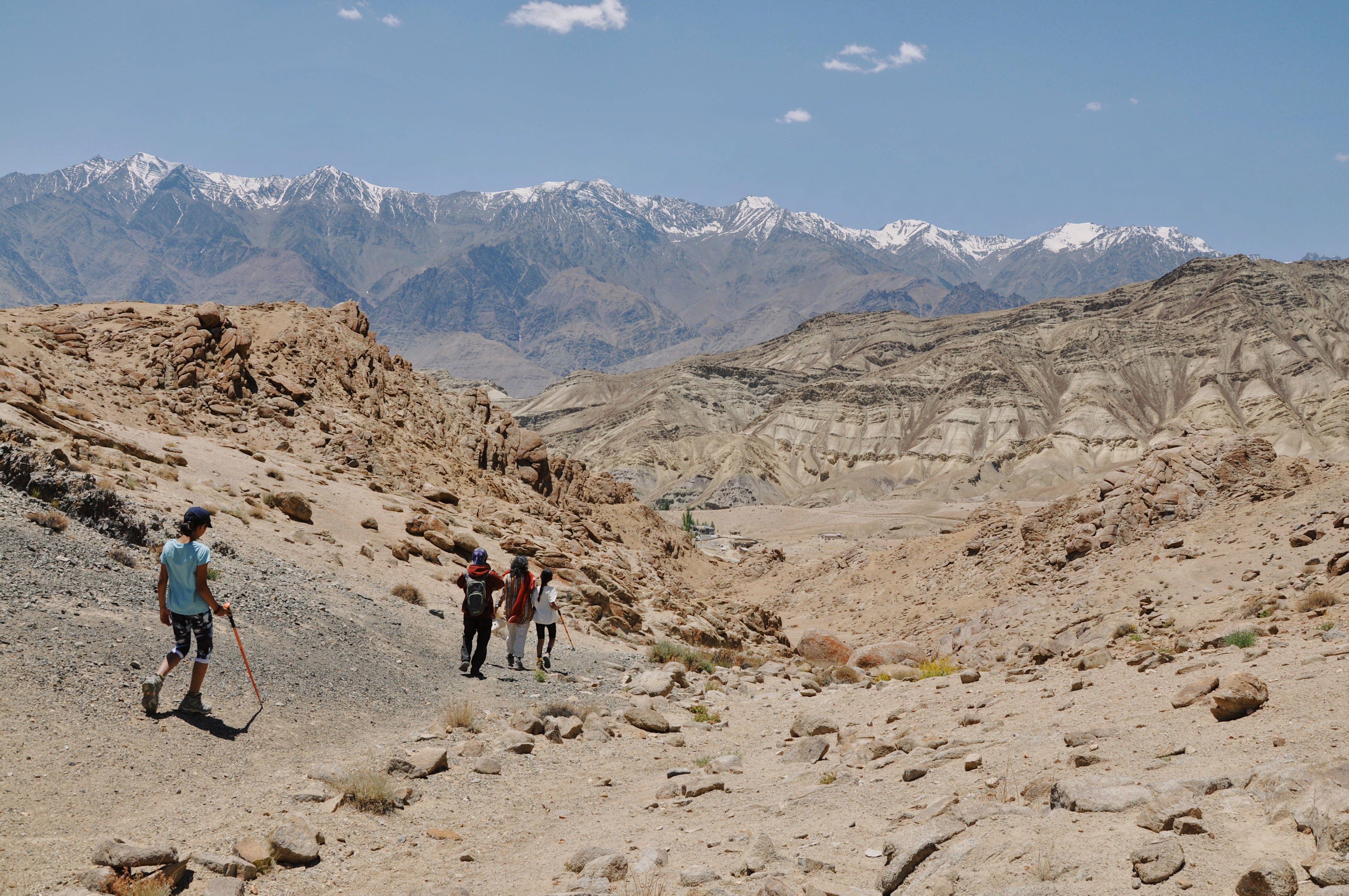
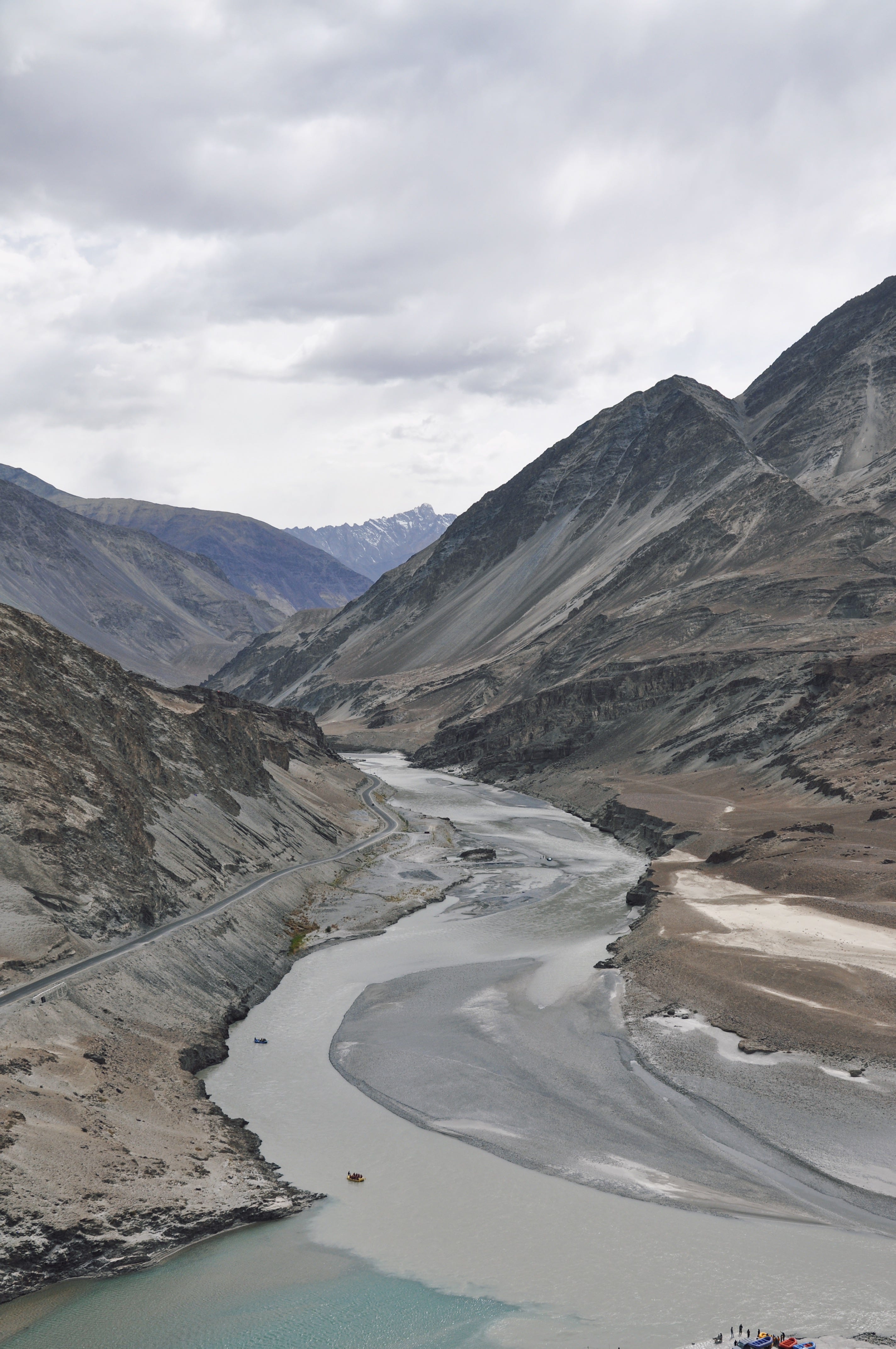
At a bend in the mountain road, we take a scenic break. Deep down, in a gorge-like valley, two rivers meet. The mystical green waters of the Indus merge with the rusty hues of the Zanskar. The two rivers retain their colours for a long stretch after their union, headed towards their shared destiny beyond Pakistan. I find a solace in this. Not far from here lies one of the world’s most contested borders, yet, despite this, the mountains continue to rise and the united rivers flow on.
Shortly after the confluence of the rivers we spot an inconspicuous sign, our cue to turn off the highway and follow a stonewall-lined gravel lane that ends in an orchard of apricot trees. We are expected at Nimmu House. Taking care to lead us clockwise around the whitewashed Buddhist stupa at the entrance, our host shows us into the front courtyard. If we had arrived a hundred years ago, this is where we would have deposited our camels and horses. We enter a lush garden sheltered by poplars and willows, the gentle trickle of an irrigation stream glistening right through the middle of it. Indrani offers us juice from the local sea buckthorn berry—it has properties that will help us ward off altitude sickness and I see to it that I have a steady supply close by for the rest of my stay.